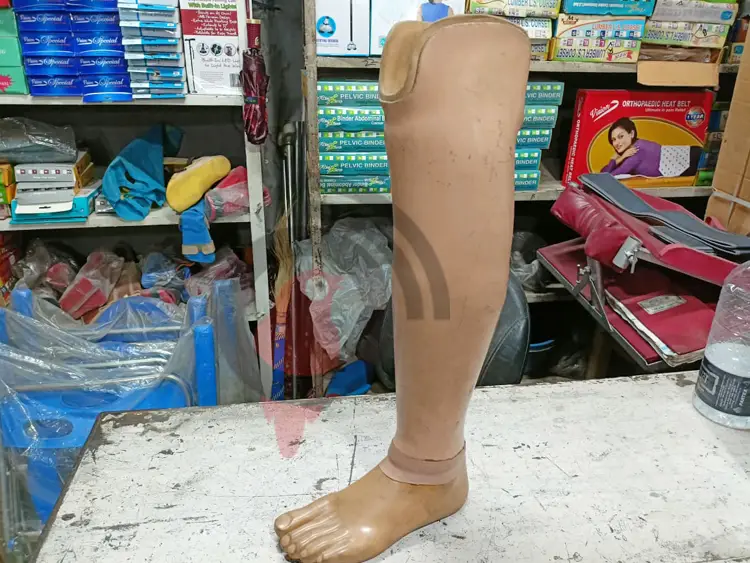
An artificial leg, also called a prosthetic leg, is a man-made device that replaces a leg lost due to injury, disease, or congenital conditions. It helps the user regain mobility, perform daily activities, and improve quality of life.
A prosthetic leg is designed to replicate the function of a natural leg. It allows individuals who have lost a leg to walk, run, and perform routine tasks independently. Using a prosthetic leg restores confidence and improves the overall physical and mental well-being of the user.
A typical prosthetic leg has the following parts:
Socket – The part that fits over the residual limb, ensuring comfort and proper alignment.
Pylon – The structural support that provides stability and bears the user’s weight.
Suspension System – Keeps the prosthetic leg securely attached to the residual limb.
Foot – Replaces the function of the natural foot, supporting walking, running, and balance.
Prosthetic legs are designed based on the level of amputation and the user’s needs:
Transtibial (Below-Knee Prosthesis) – For individuals who have lost part of the leg below the knee.
Transfemoral (Above-Knee Prosthesis) – For individuals with amputation above the knee.
Knee Disarticulation Prosthesis – When amputation occurs through the knee joint.
Modern prosthetic legs incorporate advanced technologies:
Bionic Legs – Controlled by signals from the brain or muscles, allowing natural walking movements.
Flex-Foot Cheetah – Carbon fiber prosthetic designed for running and athletic activities.
Jaipur Foot – Low-cost, durable prosthetic widely used in developing countries.
In Bangladesh, prosthetic legs are provided by several organizations:
National Institute of Traumatology and Orthopedic Rehabilitation (NITOR) – Government facility offering free or subsidized prosthetics.
Sanabil Foundation – Provides affordable prosthetic legs to the underprivileged.
Jaipur Foot Project – Offers cost-effective, high-quality artificial legs for amputees.
Artificial legs help individuals regain mobility and live a more independent life. Advances in prosthetic technology continue to improve comfort, functionality, and adaptability. In countries like Bangladesh, both government and non-government organizations play a vital role in providing artificial legs to those in need, improving their quality of life.